
Identify the Missed Court Event
Figure out what was missed before anything else. A bench warrant or capias in Hale County can follow a missed appearance, a broken court condition, or a separate judicial action, so the details matter. Start with the citation or notice and identify both the court and the case number. Felony and district matters belong to the District Clerk and the assigned district court. County Court cases run through the County Clerk. Traffic and Class C cases may sit with JP1, JP3, or a city court, depending on where the case was filed.
Then ask the clerk exactly what the docket records. A missed setting, a failure to appear, a capias, a capias pro fine, and a later order are different things. The issuing court can tell you which procedure it accepts now, whether a hearing is already scheduled, and whether anything was entered after the original notice went out.
Capias Pro Fine Has Its Own Procedure
Fine-only cases in municipal and justice courts follow their own rules. Texas Code of Criminal Procedure Chapter 45A governs much of that procedure, including the capias pro fine that can issue when a fine or costs stay unpaid under the applicable process. The exact route still depends on the judgment type and the court's record. Paying a displayed amount by itself does not necessarily cancel anything, so get the court's confirmation before assuming it does.
Ask the issuing JP or municipal court in Hale County what balance applies and what options exist. That includes hearings, payment plans, and indigence. If the notice lists a date, follow the court's instructions for that setting. A payment screen or web article cannot confirm a recall. For the governing language, see Texas Code of Criminal Procedure, Chapter 45A.
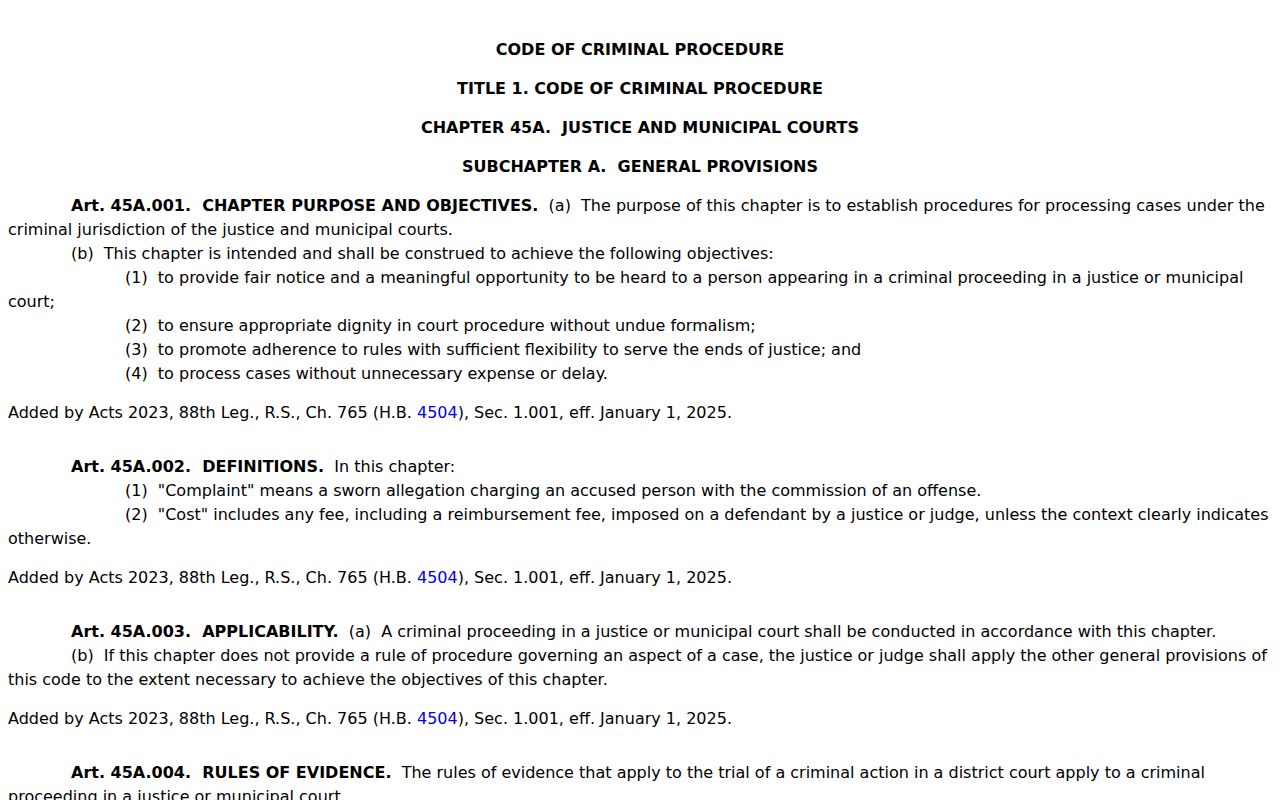
The statute sets out how fine-only matters proceed, and the Hale County court applies that procedure to the facts and docket of each case.
Plainview Uses a Show-Cause Step
Plainview's standing order from July 2025 lays out a show-cause step before any warrant and runs settings on an 11-day schedule. The same materials list a Tuesday 10 a.m. indigence hearing, payment plans of $50 monthly, and a $15 time-payment fee. Those are Plainview terms only, so confirm them with the Municipal Court before relying on them, and never assume another Hale County court follows the same steps.
Payments can be made in cash, by check, money order, cashier's check, or online by card; the city's page says card payments are not taken by phone. Call (806) 296-1177 with payment questions. Even a paid balance can leave a hearing or order open, so ask the court what its record shows. The current terms are posted at Plainview fines and payment options.
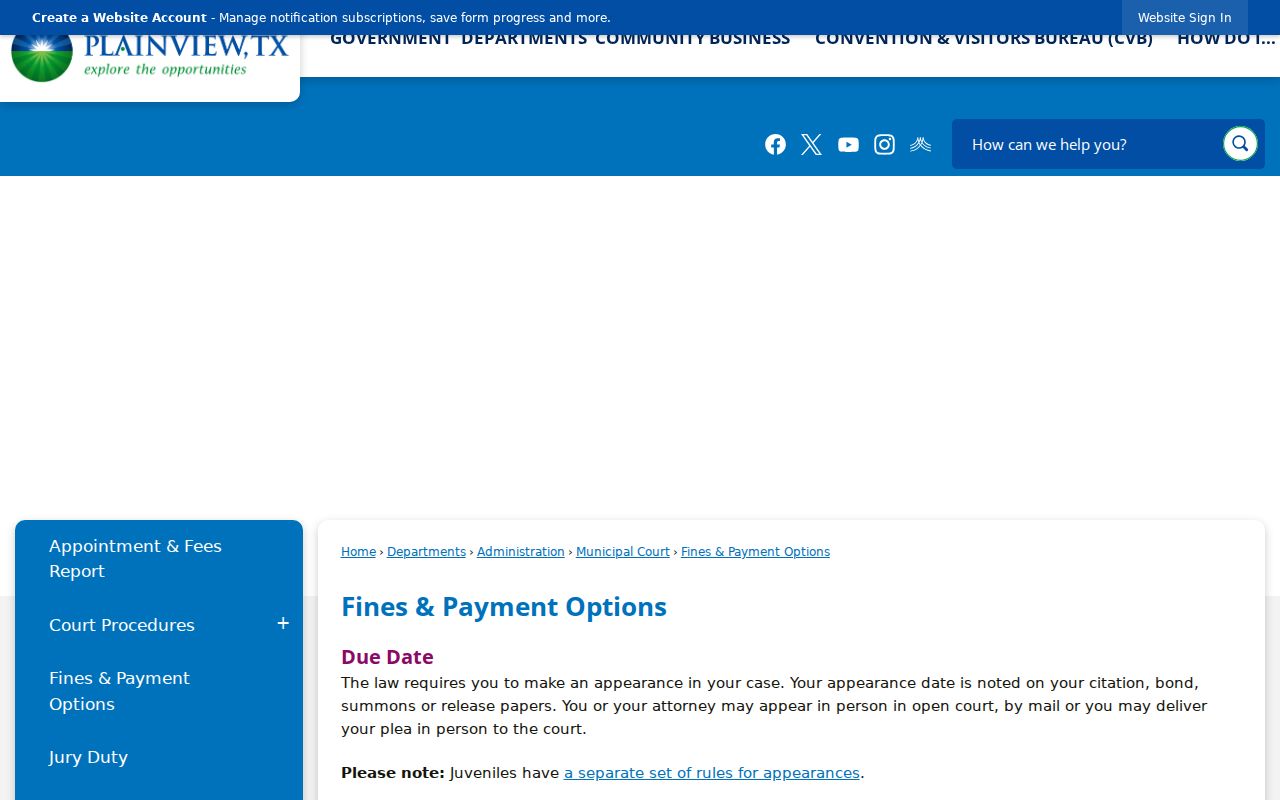
Plainview set these terms on its own. No countywide payment process follows from them for Hale County.
JP Courts Handle Precinct Cases
JP1 takes Class C and traffic cases at 500 Broadway, Suite 10, in Plainview; the number is (806) 291-5201. JP3 handles similar lower-level cases near I-27 and FM 54 by Abernathy; call (806) 757-2476. A missed date on a JP citation belongs with that specific precinct court, not the district clerk or a neighboring city's court. The county's current pages list JP1 and JP3, though Petersburg city material still refers to JP2. If your citation names JP2 or seems unclear, trust the court name and number printed on the document. Ask that court in Hale County to confirm its jurisdiction before you appear or pay.
City Court Procedures Are Not Uniform
City courts in Hale County do things differently, so read your citation's city name carefully. Plainview documents its show-cause, payment-plan, and indigence steps. Abernathy's notice tells you to contact the court within ten or more days and warns that silence can bring a failure-to-appear or an arrest warrant. Hale Center's city packets report aggregate activity rather than a case-by-case warrant lookup. Petersburg posts a docket before its regular every-other-Monday session, and those details need confirming before a visit.
Treat the differences as real. Plainview's $50 monthly plan does not carry over to Abernathy, Hale Center, or Petersburg unless that court says so itself. Ask each court how it records a missed appearance, whether a hearing is available, and what it needs to update the case.
Check for a Later Docket Entry
After a payment, an appearance, or a compliance step, ask the court when it will enter the action and whether a separate order changes the warrant. A court docket can show the event while a sheriff or third-party display has not caught up. Hold on to the receipt and case number. Then confirm the court attached the payment or appearance to the right file, because that file is what controls the record in Hale County.
If an office says a warrant remains, get the official next step. Ask whether it takes an appearance, a written request, or judicial review. A private search service cannot schedule the court's hearing or recall its process. Only the issuing court can do that, so the answer has to come from it.
DPS Holds Do Not Confirm a Bench Warrant
A hold from DPS can stop a license renewal for a Hale County citation without telling you anything about a bench warrant. That is the point to understand. The FTA/FTP program tracks reported citations at renewal time. License staff there do not confirm active warrants. OmniBase may explain an administrative compliance hold, yet it is no stand-in for the court docket. A citation can sit in that program while no warrant process exists at all. DPS allows up to seven business days after processing for a citation update to clear, and that lag is purely a transmission matter. So confirm status with the issuing Hale County clerk first, then bring license-renewal questions to DPS.
Public Documents Have Access Limits
Open records have edges in Hale County. Article 15.26 opens an executed warrant and its supporting affidavit to the public after execution, subject to other limits. Family Code section 58.010 keeps juvenile warrant files closed. Government Code Chapter 552, the Texas Public Information Act, can also excuse a body from releasing certain law-enforcement information. None of these rules decides whether a warrant is still active. Disclosure and status are separate questions. Ask the Hale County clerk which docket or document it can release. If the record belongs to a city, use that city's official open-records channel. A request never obligates an office to build a warrant search or advise you on resolving the case.
Use the Sheriff's Page as a Cross-Check
The Hale County Sheriff posts an Active Warrant List link, but treat it as one lead, not the answer. The portal's scope and refresh schedule are not stated. Call the office to ask its current inquiry route. The listed numbers are (806) 296-2724 for the office and (806) 293-5377 for jail questions. No separate warrant desk is published. Here is the part people miss. A hit on that list does not replace the court docket, and a miss does not mean the warrant was recalled. Ask the Hale County court whether a later order was entered, and ask the Sheriff which contact confirms its own list or service record.