
How to Check a Hale Center Citation
Begin with the ticket or the court notice in hand. The Hale Center Municipal Court is the office to call. No live warrant search exists online for the city, so the clerk is the route. Ask the clerk how to find the named case. Confirm the phone or address with a current official directory before you travel, since the city website does not load.
- Read the city and issuing court printed on the document.
- Keep the citation number and date available.
- Confirm current clerk contact details through an official directory or City Hall.
- Ask what docket or public record exists for that case.
- Use dated reports only for context, not as a personal status check.
The City Directory Identifies the Court Contact
The Texas Municipal League profile lists a Hale Center Municipal Court, a court clerk, and a police role. The city phone shown is (806) 839-4451. No current court hours or working court page appear there. So treat the directory as a starting point, not proof of a live case or today's schedule. When you call, ask which office handles citations. Ask what identifier it needs. Ask whether a public docket or document can be requested. If the phone tree has changed, confirm the court's current contact through the city before sharing personal details. The Texas Municipal League Hale Center directory profile carries the listing itself.
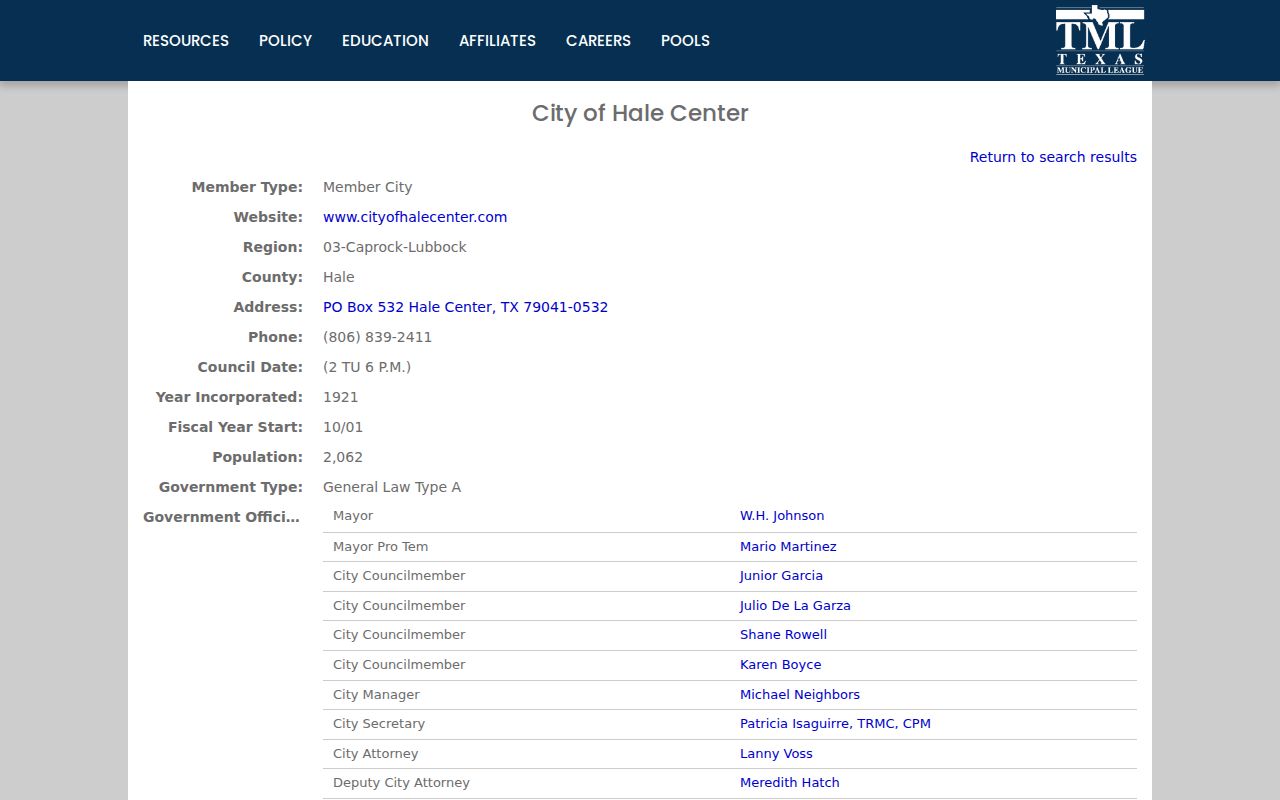
The directory gives Hale Center a municipal court listing; it carries no warrant search results and no current hours.
Separate Hale Center Police and Court Questions
The directory points to two separate city roles. A Municipal Court clerk keeps the docket and handles citation questions. Police records cover department activity and warrant service. Ask each office only for what it keeps. No separate warrant desk, arrest list, or citywide record portal is confirmed for Hale Center. A court setting or amount due goes to the Municipal Court contact. A police report request goes to the department. Since the city site is down, verify both channels through a current official source before trusting old directory details.
Meeting Packets Report Court Activity in Aggregate
The January 2025 council packet for Hale Center reports zero warrants issued, zero served, three closed, and three total for the listed period. The March 2025 packet shows zeros across its warrant totals and fourteen entries in an Omni/collections field. Annual reporting tracks aggregate warrants, FTAs, and collections too. These are dated public totals, nothing more. They name no one. They match no cause number. They cannot tell you where any single person's case stands right now. A zero monthly count does not mean no outstanding warrant exists from an earlier case, and later reports may show different totals.
Read the Local Matter by Its Court Label
Hale Center publishes no list of individual warrant types or docket fields. The city code sets out the municipal court's powers. The meeting packets use aggregate categories such as warrants, FTA, OmniBase, and collections. Those labels cannot tell you which procedure fits a specific person or ticket. Ask the clerk whether the case involves a citation. Ask if it was a missed appearance or a capias. The court can explain which record it holds and whether a hearing or payment has been entered. Never turn a monthly category into a live warrant result.
Why Aggregate Counts Cannot Clear a Case
Monthly totals squeeze many cases into a few numbers. The January count of three closed does not show which cases were closed, whether a specific warrant was included, or whether another entry is still open. March's fourteen Omni/collections entries describe a program or reporting category, not fourteen current warrants. For a personal answer, give the clerk the citation or cause number. Ask what the docket says today. If the city cannot locate the case, check the issuing court named on the paper. Ask whether the city or another jurisdiction holds it. That court alone can confirm what stands.
What a Public Hale Center Case Record May Show
Hale Center offers no searchable screen and no standard public warrant record format that a visitor can open. A clerk may still identify a case number, charge, date, next setting, or a filed court order. None of that appears in a live city search. So ask what the public file actually holds. Keep the request narrow. Give the citation number, the approximate date, and the document you want. If the clerk cannot discuss a protected matter, ask whether any public docket entry or order can be provided. The city may still keep the record. Do not treat the missing portal as proof.
The City Website Was Not Available in the Review
The official Hale Center city website would not load when checked, so no current Municipal Court page, payment link, or warrant lookup could be confirmed from it. That is a technical problem, not a sign the court has closed. A site can come back or get reorganized at any time. Skip third-party copies of city contact data. Call a verified City Hall number instead, and let the staff point you to the right court page for a Hale Center warrant question. Hale Center's official city website is where the city publishes its court and payment information whenever the site is reachable.
Site availability is a technical matter, and a failed load says nothing about the Hale Center Municipal Court itself.
City Code Describes Authority, Not Live Status
Hale Center's Ecode pages spell out the municipal court's powers, including provisions on approvals for search warrants. A code section describes legal structure only. It will not tell you whether an arrest warrant or capias has issued, been served, or been recalled in any named case. Treat it as background, not a personal warrant search. For the actual case record, call the clerk. If your question concerns a search warrant tied to an open investigation, disclosure may be limited, and the investigating agency or the court decides what can be shared. The Hale Center municipal-court code provisions set out that framework.
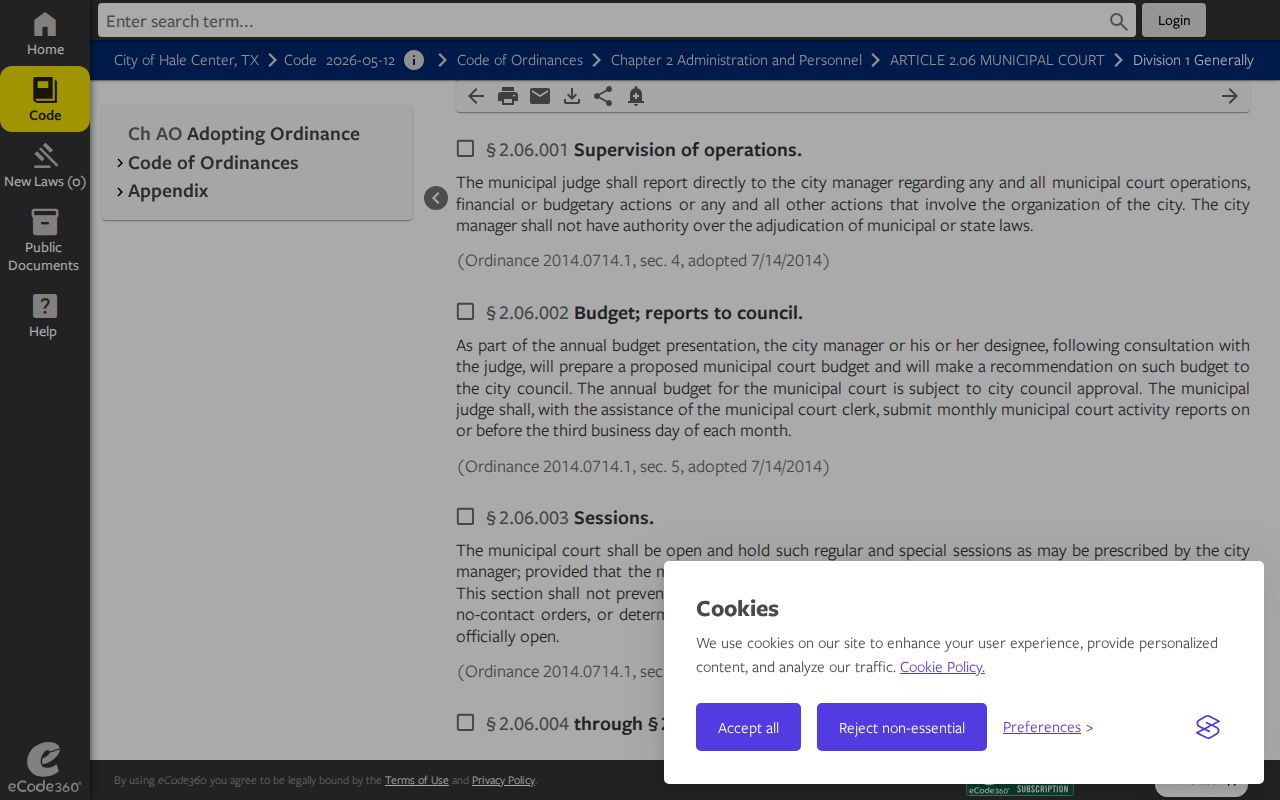
The code image documents authority and approval rules, not an individual case entry.
Use Another Jurisdiction Only When the Citation Names It
Warrant flow: Hale Center Municipal Court / Police › another county, JP, or state office only when named by the citation; consult Hale County warrant records or county warrant lookup for that separate route. The city case should be checked with Hale Center's own clerk.
Public Information Requests Depend on the Record
Government Code Chapter 552 builds the Texas Public Information Act request framework, though exceptions can shield law-enforcement records. Code of Criminal Procedure Article 15.26 governs access to a warrant after it has been executed, and Family Code section 58.010 keeps juvenile warrant material confidential. Which rule applies depends on the record, so the city clerk is the right first call. No Hale Center request form or current city submission address appears on the city's own materials. Confirm the route through an official Hale Center source before mailing anything. Also know the difference: a records request retrieves an existing document, while only the court can state where a case stands right now.
Ask for a Case-Specific Answer
When you reach the Hale Center Municipal Court, write down the date, the clerk you spoke with, your citation number, and which record was checked. Ask whether a new setting, ruling, or order has been entered since the citation date. That one question gets you current facts no summary can match. If you want a public document, ask how to request a copy and whether any part may be withheld. Keep any meeting materials for background only. Aggregate totals show the court tracks warrants and collections, but they cannot replace the clerk's answer about a named case.