
How to Check an Edmonson Citation
Begin with the paper that opened the case. Edmonson publishes no official court page, police page, records request page, or warrant search that a resident can check. That leaves the issuing court printed on the citation. Its name is the reliable starting point. If no paper exists, ask whoever supplied the case information for the court's full name and the cause number. Only then pick a contact, because a warrant question for Edmonson goes to the court that issued the case, not to whichever office seems closest. The citation itself names that court.
- Read the court name, case number, and date on the document.
- Use only the contact printed by that issuing court or confirmed on its official source.
- Ask which clerk holds the case and what identifier it needs.
- Request an existing public document through the office's stated process.
- Do not assume another town's online system covers Edmonson.
The Census Row Is Geographic Context Only
Census data gives geography, not government. The 2020 Census incorporated-place table lists Edmonson with a population of 86. That single row identifies the place on a map. It is not a court directory, a police roster, a warrant count, or a service map. Nothing about a town of 86 people tells you whether a local court operates there, or which court issued a particular case. For that, only the citation, a court notice, or a verified government contact will do. Treat demographic material as context, never as a records route. The size of Edmonson cannot tell you how its citations are handled, and a neighboring community's process does not transfer either. The court printed on the document controls where your question goes.
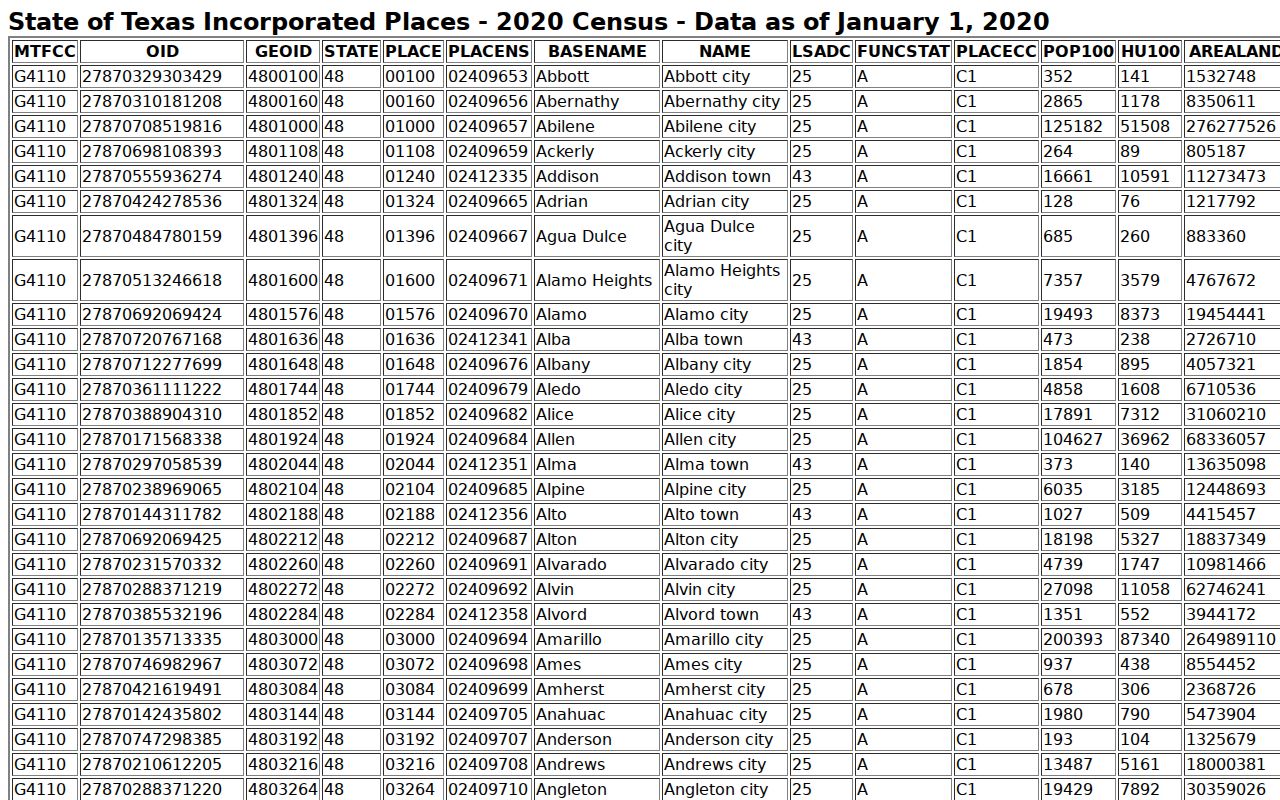
The table documents a population figure, not a law-enforcement or court record.
What the Reviewed Sources Do Not Confirm
Edmonson lists no verified municipal court, city clerk, police department, sheriff substation, official city website, open-records page, warrant portal, or warrant phone line. That is a gap in published contacts, nothing more. A phone number or office may still exist without a public webpage. The gap does not prove that Edmonson has no court, no police service, or no active warrants. It only means the answer is not posted anywhere you can look up. Be just as careful in the other direction. Do not borrow contact details from Plainview, Abernathy, Hale Center, or Petersburg for an Edmonson matter unless your case paper names one of those jurisdictions. The court or agency shown on the document is the one to ask, and it will identify its own records route. A warrant question always goes back to the issuing court, not to whichever nearby office answers its phone first.
The Issuing Court on the Notice Controls the Route
Trust the document over the town name. A notice's heading and court seal name the body with authority. That may be a municipal court, a justice court, or another tribunal, and no single answer covers every matter tied to Edmonson. Call the court printed on the notice. Ask whether it issued the citation and keeps the docket. If a caller or a letter offers only a town name, press for the court's full name, the case number, and an official phone or web address. Those details let you verify jurisdiction without borrowing another city's procedures. An Edmonson warrant question belongs to the issuing court alone, and the paper in hand identifies it.
Local Warrant Types Could Not Be Verified
No Edmonson public source lists warrant categories, citation consequences, or a local court's failure-to-appear policy. Keep that in mind before assuming anything. A general Texas term like capias or capias pro fine is not a confirmed Edmonson practice until the issuing court says so. Read the exact wording on your notice, then ask the clerk what event it describes. A missed appearance, an unpaid fine, an active warrant, and a recalled order are four different records. Only the responsible court can say which one it entered. An outside directory cannot, and neither can a population table. The clerk's answer settles what the paper means; nothing else should.
Do Not Borrow a Procedure From Another Town
Another town's portal will not help you. Edmonson is not connected to any neighboring city's citation portal, court calendar, payment plan, or public warrant list. Those procedures belong to the jurisdiction that published them, and only to it. A broad online search may surface nearby court names or regional results without showing that any of them has authority over an Edmonson document. Check every result against the issuing court printed on your original paper. That court, and no other, controls the case. If a source cannot name that court, get the full court name and an official contact before you submit personal details or a payment. Warrant questions about Edmonson go through the court on the notice.
Ask Which Identifiers the Clerk Can Use
Edmonson has no published search form or standard record layout, so do not guess what the court accepts. Lead with the citation or cause number. Ask the clerk what other details are needed and whether they can go through an official secure channel. When the office answers, write down the case number, the court, the date, and which docket or document was checked. That record keeps your Edmonson inquiry straight if you have to call again. If no match turns up, ask whether a different court appears on the notice. Cases do move, and a transfer would explain the miss. The clerk can tell you where the file went and what identifiers the next office wants.
Distinguish a Missing Webpage From a Missing Record
Edmonson has no current official website or public search page. That absence means less than it seems. Online availability and record custody are different things: a court can keep a full docket with no searchable public interface anywhere. The reverse holds too. A general search result can exist without being the court's authoritative case record. So rely on the source printed on the ticket, or on a contact you verified through the named government office itself. Draw no conclusions from silence. No city portal appearing does not mean your case is closed. A broad online service returning a possible match does not mean an Edmonson warrant exists either. The issuing court's own records answer both questions, and only its clerk can confirm what they show.
Keep Any Public Request Narrow and Traceable
Once the warrant document names its issuing office, ask that office for one specific item, like a docket entry or a filed order. Edmonson lists no set request form or delivery method. So ask the clerk directly how it accepts records requests and whether the file is in its custody before you send anything. Keep a copy of what you sent, the date, and any follow-up the office requests. A narrow ask keeps a court document from getting tangled with a police record or a case from another town.
Route Beyond Edmonson Only When the Paper Names That Office
Warrant flow: the issuing court shown on the Edmonson document › another county or state office only if the case identifies it; the Hale County warrant records home and county lookup page explain those separate routes. This is a conditional referral, not a verified Edmonson jurisdiction map.
Public-Record Rules Do Not Create a Search Portal
Texas sets the rules for public records, but it builds no lookup tool. The Texas Public Information Act, in Government Code Chapter 552, governs requests to covered public bodies, and legal exceptions can shield some law-enforcement material. Code of Criminal Procedure Article 15.26 covers access to executed warrants and their affidavits after execution. Family Code section 58.010 keeps juvenile warrant information confidential. Those statutes mark the boundaries. They do not tell you which office holds an Edmonson case. For that, call the issuing court and ask whether it keeps a public record of the matter and what formal request it requires. Confirm custody first. A neighboring city cannot answer for Edmonson.
Build a Verifiable Follow-Up Record
Build a paper trail as you go. Keep the citation, any envelope or notice, the court's contact details, and the date of every call. Ask the official to read the case number back to you and name the docket entry or document checked. Written confirmation helps you tell an old notice apart from a separate matter. If the court cannot match the case from what you have, go back to whatever office issued the paper and ask for a corrected contact or the right jurisdiction. An Edmonson warrant question needs an Edmonson answer. A neighboring city's hours, a guessed phone number, or an assurance that no warrant exists will not fill that gap.