
How to Check for a Warrant in Plainview
Here is a five-step path for a city citation. The ticket names the court that decides. A Plainview ticket moves through the city Municipal Court, and any non-city record list is a separate matter entirely.
- Read the citation number, court name, date, and appearance instructions.
- Use Plainview's city citation search only for a Plainview citation.
- Call Municipal Court if a match is missing or the result needs explanation.
- Contact the City Secretary for an existing public city record request.
- Use police records channels for a police report or department question, not a court docket ruling.
Keep the ticket and every receipt together. Ask the Plainview clerk which entry was checked and whether a payment, a hearing, or a new order has changed the case since.
Plainview's Citation Search Uses Specific Identifiers
Plainview's citation search offers several identifiers. You can look up a citation number with date of birth, a driver's-license number and state with date of birth, or a Social Security number with date of birth. Plate and state work too. So do name with date of birth, or a business name alone. Every field is built to find a local Plainview citation, and none of them confirms an entry from another court or a neighboring city. When a result appears, use its citation details to contact the court. If nothing appears, check for typos. Confirm the ticket truly names Plainview Municipal Court. A blank answer can mean a different court, or a record the interface does not display. The clerk can tell you what the search verifies.
Police and Court Contacts Answer Different Questions
Each Plainview office answers a different question. The Municipal Court sits at 202 W 5th, open weekdays 8 a.m. to 5:30 p.m., and answers at (806) 296-1100. The Plainview Police Department runs its own office and records route. The City Secretary handles open-records requests for the city. Call the court about citation status, police about department records or service, and the Secretary about a public-information request. Don't trade one channel for another. A police report request can't replace a court docket inquiry, so explain the document you need and give its identifier. Contact pages change. Confirm current hours before you drive over, and check the Plainview Police Department page, which lists the department's own contact details.
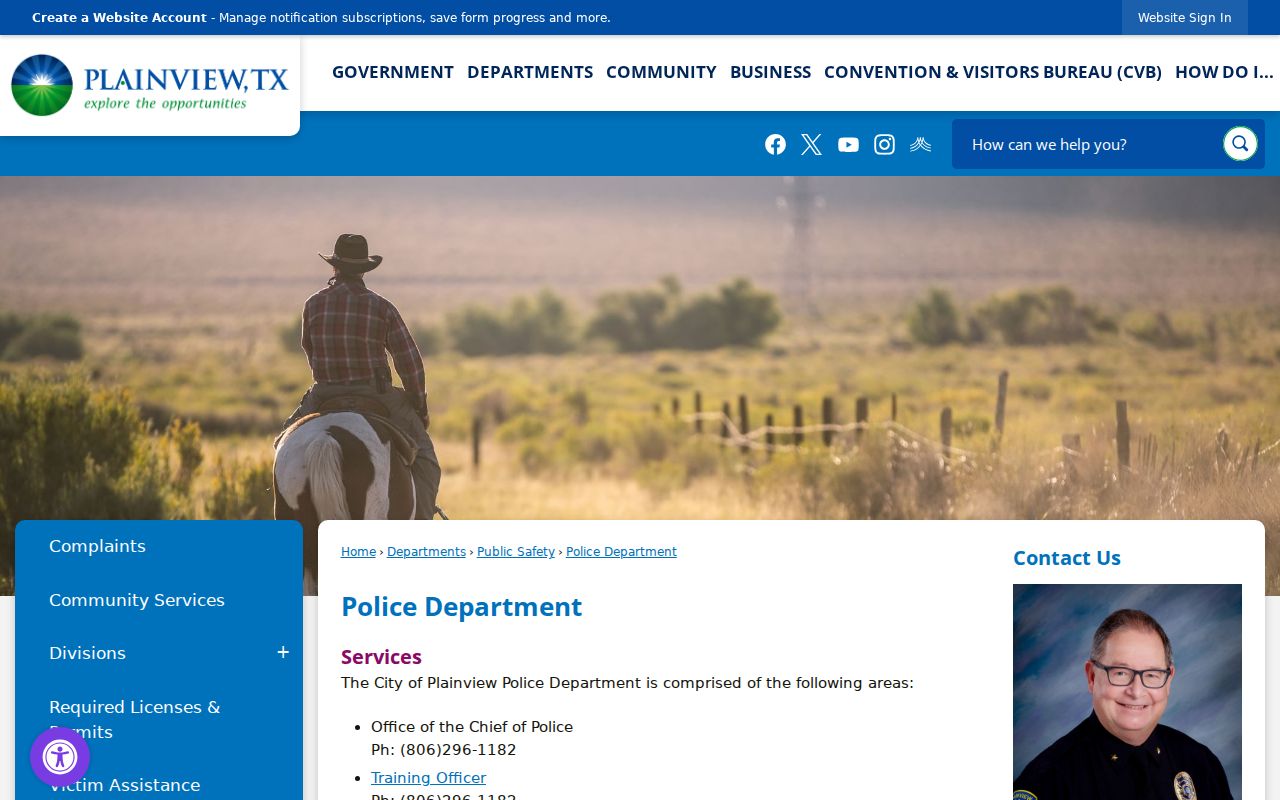
The department page is a police contact route, not a municipal court search result.
Types of Plainview Municipal Court Warrants
Plainview's city materials describe a show-cause step before any warrant, plus payment and appearance procedures for fine-only cases. What they do not publish is a list of every Plainview warrant category. Ask the Municipal Court directly. The answer tells you whether the entry is an FTA, a capias pro fine, or another order, since an unpaid citation is not always the same status. A standing-order document adds local detail. Plainview settings there follow an 11-day schedule, and the order names a Tuesday 10 a.m. indigence hearing. That order carries its own date. Verify with the court before treating any of it as current for your case. A show-cause notice is a chance to answer the court's stated issue under its procedure. Not every missed citation follows the same path. Read the notice closely, and ask the clerk whether the case has been set, continued, paid, or changed by a judge.
Payment and Time Plans Have Local Conditions
Plainview payment plans run $50 a month. A $15 time-payment fee applies too. The city's payment page lists cash, checks, money orders, cashier's checks, and online card payments, but no cards by phone. Payment questions go to (806) 296-1177. Confirm the amount and accepted method with the Plainview court first. Paying does not automatically recall a warrant. Ask the Plainview clerk whether the payment posted to the correct citation and whether a judge entered a separate order. Keep your receipt and note when the docket should reflect the action.
Send City Requests Through the Secretary
Plainview takes Public Information Act requests several ways. The Plainview City Secretary accepts an online form, email at orr@plainviewtx.org, mail, or a walk-in delivery. The official open-records page spells out those channels. A separate form shows the request fields plus redaction and delivery controls. Use them for an existing public city record. Skip private search sites when verifying legal status. Name the record, the date range, the department, and any citation or report number. The office may ask for clarification or apply a legal exception. A Plainview request can obtain a document the city keeps, but it cannot force a new warrant database or a reading of a court order, and the Plainview Public Information Act form shows the fields involved.
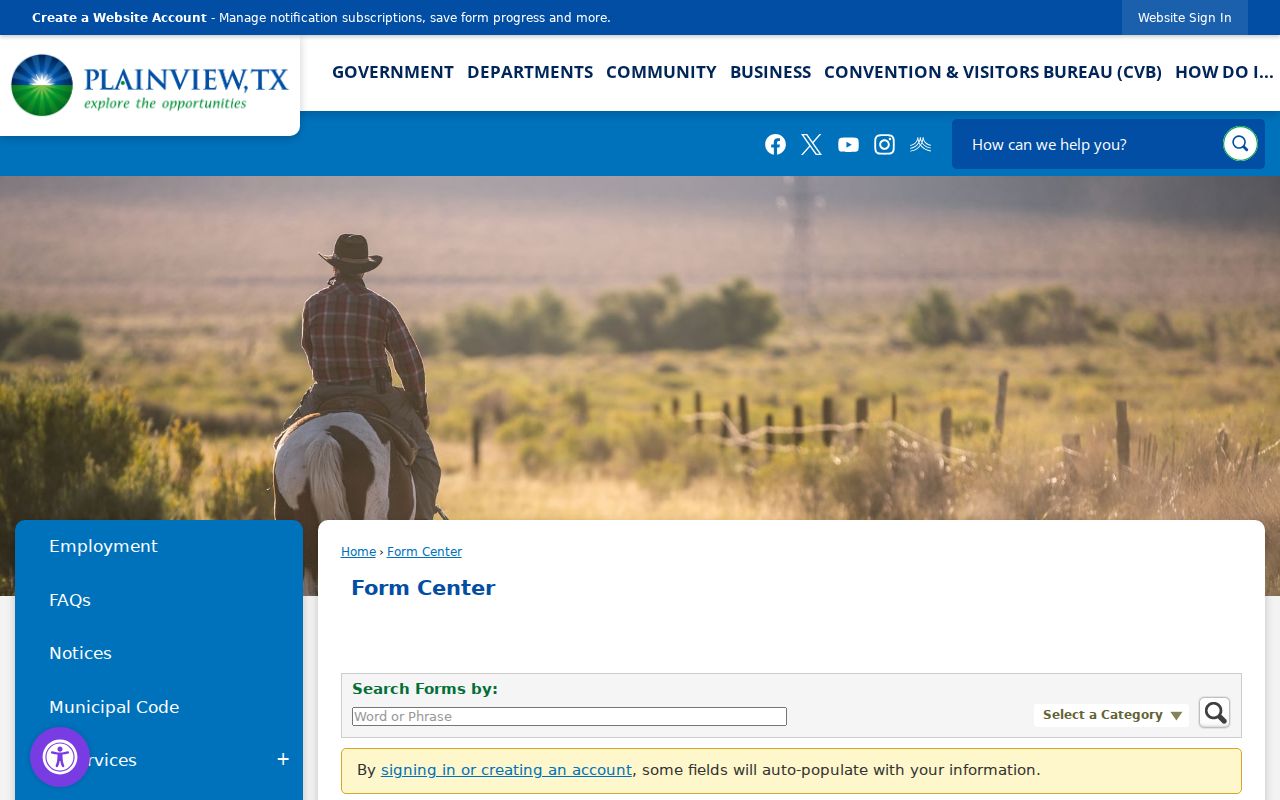
Submit through the current city channel and retain the request receipt and response.
The Official Open-Records Page Shows Submission Options
The Secretary's official page lays out four routes: online, email, mail, and in person. Pick the listed route for city-held Plainview records, and name the department that may have the file. A citation docket is different. The Plainview Municipal Court is the first call there. Open-records processing is for documents. Share no more personal information than the official form requires. Save a copy of what you submit, note any estimated response time, and check the Plainview open-records information for current details.
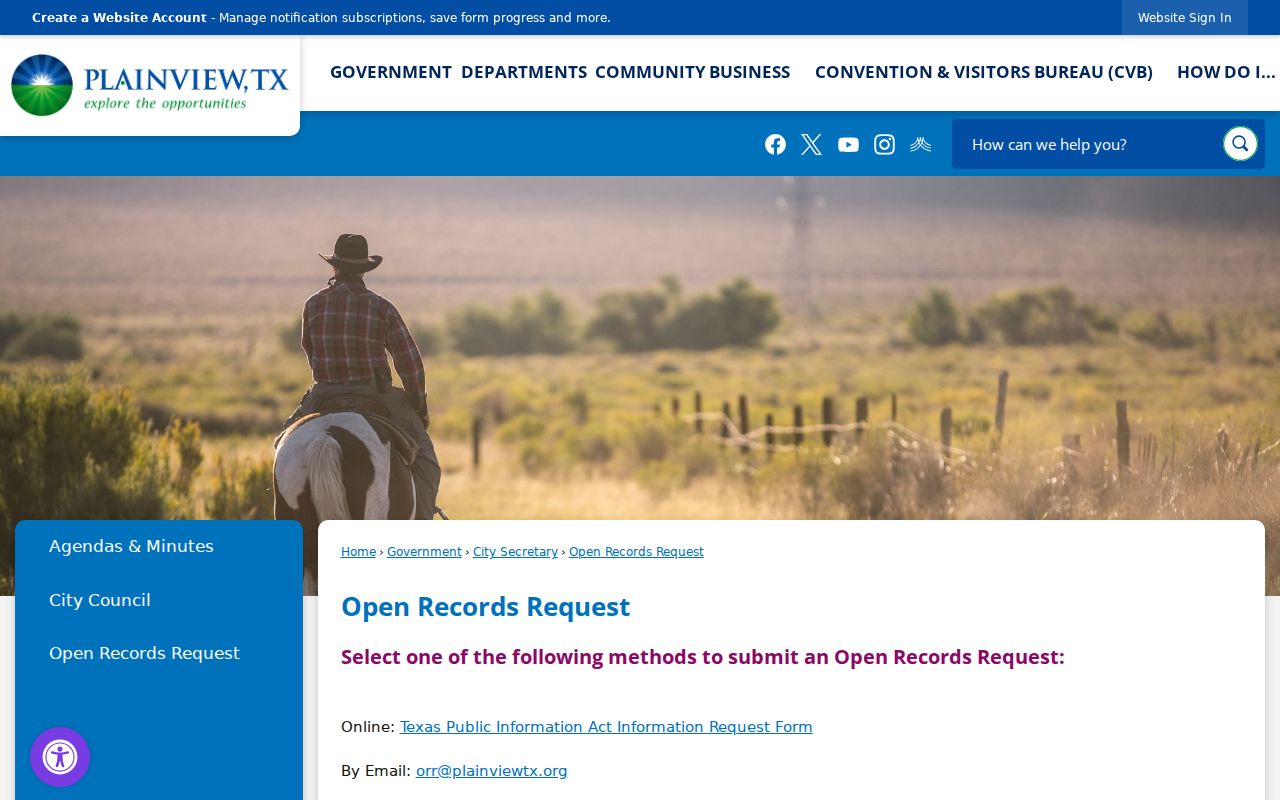
The official city page is the current reference for available request channels.
What a Plainview Citation Record Shows
Citations, incident reports, payment receipts, and warrant recall orders are separate records. Plainview keeps each with the office that made it. A docket entry sits with the Municipal Court, while an incident report sits with the police department. Ask each office for its own record. Two records mean two requests. The court can say what has been entered on its case. The department can address its report and service questions. When you need a document rather than advice, use a written public-record request; for a live case, ask the Municipal Court which docket item it reviewed and whether a later setting or order followed.
| Search key | The city's form accepts citation, name, license, plate, and other identifiers. |
|---|---|
| Returned fields | The captured source does not document every field shown after a match. |
| Current status | Ask the clerk which docket entry or order it checked and its date. |
Follow the City Route Before Looking Beyond It
Warrant flow: Plainview Municipal Court / Police › Hale County offices only if the citation names them › state license-compliance route if relevant. For county-level records, use the Hale County warrant records home or county lookup route; the city citation search does not establish a county or state warrant status.
Confirm Any Change With the Municipal Clerk
After an appearance or payment, ask when the court expects its record to update and whether a separate order is needed. Keep the citation number, date, and amount paid. Save any written notice too. Screens lag in Plainview like everywhere else. A display can show a citation without reflecting a later hearing, and a payment receipt does not itself show that every step of court process has ended. Use the city's current instructions for a hearing, a payment plan, or an indigence request. No third-party service can recall a warrant or alter the Municipal Court docket. The Plainview clerk confirms the entry it maintains.
Public City Records Still Have Exceptions
The Texas Public Information Act, Government Code Chapter 552, governs requests to Plainview city bodies, though its exceptions can cover some law-enforcement records. Not everything is open. Code of Criminal Procedure Article 15.26 addresses public access to executed warrants and their affidavits after execution. Family Code section 58.010 keeps juvenile warrant information confidential. A request may be narrowed or redacted. Ask which existing public record the city can provide. Plainview's Municipal Court handles case status; the City Secretary handles the submission path.
Keep a Clear Case Record for Follow-Up
Log every call you make. Note the date, the office contacted, the citation number, and the exact answer you received. If an online result differs from the clerk's response, ask the court which system or docket event it checked. Keep the pieces together. A receipt, a show-cause notice, and any later order belong in one file, so the next caller can follow the same history. Plainview's city routes are built for Plainview citations. They cannot settle a case from another municipality, so start with the paper in hand and let the issuing office identify its current procedure.